

When Balance Begins to Feel Like Another Thing to Manage
For a long time, my mornings began with the snooze button. I would give myself a few extra minutes, then a few more, until there was just enough time to get dressed, brush my teeth, pull my hair back, grab coffee, and move into the day. I rarely thought about the pace of it because there was always somewhere to be or something waiting for my attention.
That pace followed me through several seasons of my life. I worked in corporate IT while building Jade Scott Design on the side, and when I eventually left my corporate career to run the business full-time, I expected the transition to bring a little more freedom. I had worked toward that change for years, and I assumed that once I was doing the work I had chosen for myself, life might feel more spacious.
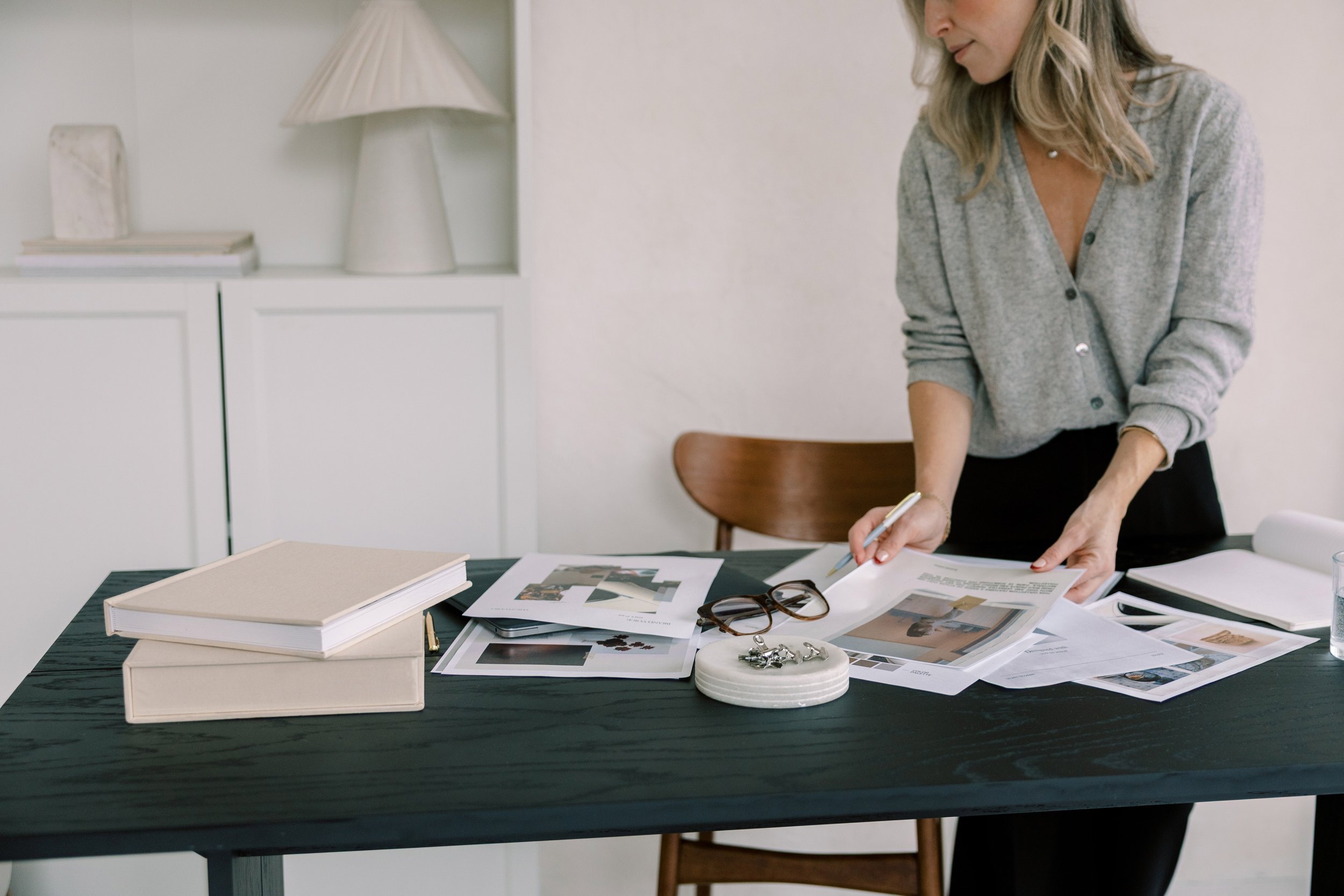
The celebration period was brief. Running a business meant being responsible for almost every part of it, especially in the beginning, and I quickly learned how many roles could fit under the title of business owner. I was the designer, but I was also building the website, handling marketing, answering questions, taking care of administrative work, and learning how to create a reliable income on my own.
There was satisfaction in building something from the ground up, and much of what I learned during those years still serves me now. There was also a growing awareness that work could expand into nearly every available hour if I allowed it, particularly when there was no clear line between the person doing the work and the person responsible for keeping the business alive.
The rest of life continued alongside it. I was a wife and a mother, buying groceries, cleaning the house, remembering schedules, making lists, maintaining relationships, and tending to the ordinary details that keep a household moving. I had my own interests too, including places I wanted to travel, things I wanted to change in our home, classes I wanted to take, and ideas I wanted time to explore.
Those were often the easiest things to move aside. A child’s appointment has a time attached to it, a client project has a deadline, and an empty refrigerator eventually demands attention. The things we want for ourselves are usually more patient, which makes it remarkably easy to tell ourselves that we will return to them when life becomes less full.
I began to notice the cost of that arrangement gradually. There was no single moment when I could point to a problem and name it, but there were stretches when I felt thinly distributed across too many parts of my life. Small frustrations seemed to carry more weight, and I could feel how resentment begins to gather when your own wants are continually the most convenient ones to postpone.
During those years, I also heard the phrase work-life balance everywhere. It came up in conversations about careers, motherhood, burnout, household responsibilities, and the increasingly complicated work of holding all of those things together. The phrase suggested that there was a better arrangement somewhere, one that could be reached through careful planning and enough discipline.
When I pictured balance, I saw a well-managed calendar. Work had its hours, family had its hours, the house was tended to, and there was still room for exercise, friendship, rest, and whatever else mattered. The appeal was obvious, especially during seasons when my own days felt crowded and I wanted to believe that better organization might solve the problem.
Life kept resisting that kind of order. Children need different things as they grow, businesses move through demanding stretches, bodies change, relationships shift, and unexpected circumstances rearrange priorities with very little notice. Even during relatively ordinary years, one area of life will often ask more of us than another.
I found myself thinking more about the rhythms of nature instead. A season does not remain fixed because the previous one worked well. The light changes, the temperature changes, and the landscape responds. There are periods of growth and abundance, followed by periods of release and rest, and nothing about that movement suggests failure.
Over time, alignment became a more useful word for me than balance. I sometimes picture one of those small desktop pendulums made of metal balls hanging side by side. When the pendulum is resting, everything lines up neatly at the same height, but once one side is lifted and released, the whole object begins to move.
One side rises while the other remains lower, then the movement travels back again. The shape is constantly changing, yet there is a rhythm holding it together. That image came much closer to the way my own life actually behaved.
Some seasons required more from my business. Others drew my attention toward my family, my home, or my own energy, and expecting all of those areas to receive equal attention only made the natural shifts feel like something I was failing to manage. Alignment gave me a different way to look at those changes.
My home became one of the clearest places to see this. We have an open floor plan, and when I step out of our bedroom in the morning, I can immediately see the living room and kitchen. When my children were little, I began waking before everyone else because I wanted a little quiet before the house came alive.
That time has looked different over the years. Some mornings I meditated or journaled, while other mornings I stretched or did a little yoga. Lately, I may simply sit on the couch with a cup of warm water and my dog beside me, enjoying the few minutes before the house begins asking anything of me.
Eventually, I noticed that those mornings were shaped by what I had done the night before. Before bed, I started spending a few minutes putting the main living area back in order. I would fluff the pillows, fold the blankets, clear the coffee table, and straighten the kitchen island as much as I could.
It is a very small ritual, and most nights it takes only a few minutes. I can still feel the difference when I walk into the room the next morning.
When the space is relatively clear, I sit down without immediately thinking about what needs to be handled. I can notice the warmth of the cup in my hands, spend a little time with my dog, or talk with my husband before he leaves for work. When the room has been left cluttered, my eyes tend to move directly toward whatever is waiting for me.
A glass on the table becomes something to put away. A pile on the kitchen island becomes another small decision, and before I know it, my mind has entered task mode. The room has not changed my schedule, but it has changed the way I enter it.
I began paying more attention to moments like that. A home can communicate through very ordinary details, and often we feel those details before we consciously interpret them. A crowded surface can create a subtle sense of unfinished business, while a familiar chair, an open window, or a cleared table can affect the pace of a room in ways that are difficult to measure but easy to recognize.
So much of life at home is repetitive. We prepare meals, wash dishes, fold laundry, make beds, wipe counters, open curtains in the morning, and turn off lights at night. Those tasks can feel like evidence of everything there is to maintain, but they can also become part of the rhythm that holds a household together.
For me, folding a blanket at night became connected to the way I wanted to feel the next morning. Clearing the kitchen island meant there was one less thing asking for my attention when I woke up. Neither action changed the amount of responsibility in my life, but both affected how I experienced the first few minutes of the day.
I became more interested in these smaller observations as I worked on Room for Home. I had spent years thinking about why so many capable women could manage an enormous amount and still feel as though they were falling behind in their own lives. The home kept returning to that question because it is where so many roles and responsibilities overlap.
Work follows us into the kitchen on a laptop. Family life gathers around the table, laundry waits while we answer messages, and the same rooms hold our conversations, our frustrations, our plans, and our rest. The home has a way of making the pace of our lives visible.
Sometimes that visibility is uncomfortable. A pile that keeps moving from one place to another may reflect a decision we have been avoiding, while a room we no longer enjoy may belong to an earlier version of our life. Other times, the home shows us what is working through the places we naturally return to and the small rituals that make a day feel more settled.
I still have full seasons. There are evenings when the blankets remain unfolded, mornings when there is no quiet time at all, and weeks when work or family asks for more than I expected to give. I no longer read those shifts quite as quickly as evidence that life has fallen out of balance.
Most nights, though, I still walk through the living room before I go to bed and put a few things back where they belong. In the morning, I come back into the same room, sit down for a while, and notice the difference those few minutes have made.