

Decorating for the holidays certainly brings out our love of tradition. I know my children love unpacking familiar ornaments and decorations we've collected over the years, making our home feel a little more festive and extra cozy.
But seasonal decorating has also become a reason to buy more things. More artificial accessories and decorations that spend most of the year tucked away in storage or, depending on their quality, eventually end up in a landfill.
I believe there's another way to approach it.
Instead of thinking about what we should add to our homes each season, what if we considered how we want them to feel?
Winter is a wonderful time to explore this idea, whether you're preparing for holiday gatherings or settling into the quieter weeks and months that follow. The natural world offers plenty of inspiration, and we don't need to fill every surface with decorations to make a home feel welcoming.
As a Feng Shui designer, I lean on the Five Elements to guide these seasonal changes. In Feng Shui, winter is associated with Water, an element that represents stillness, introspection, and restoration, among other qualities. Its traditional colors include black and deep navy, while its shapes are curved or flowing. Glass and reflective surfaces also express Water.
Water’s cooler, darker energy can also benefit from adding the warmth of Fire and the grounding qualities of Earth. Incorporating these elements helps create balance, rather than emphasizing one element throughout a space.
For me, it's less about following a rigid set of decorating rules and more about finding a balance that feels good to you.
I've put together this winter decorating checklist to help you look at familiar spaces from a different perspective. You can choose a few ideas that appeal to you, or use it as inspiration to make the most of what you already own.
Begin With What Nature Offers
1. Bring the outdoors in.
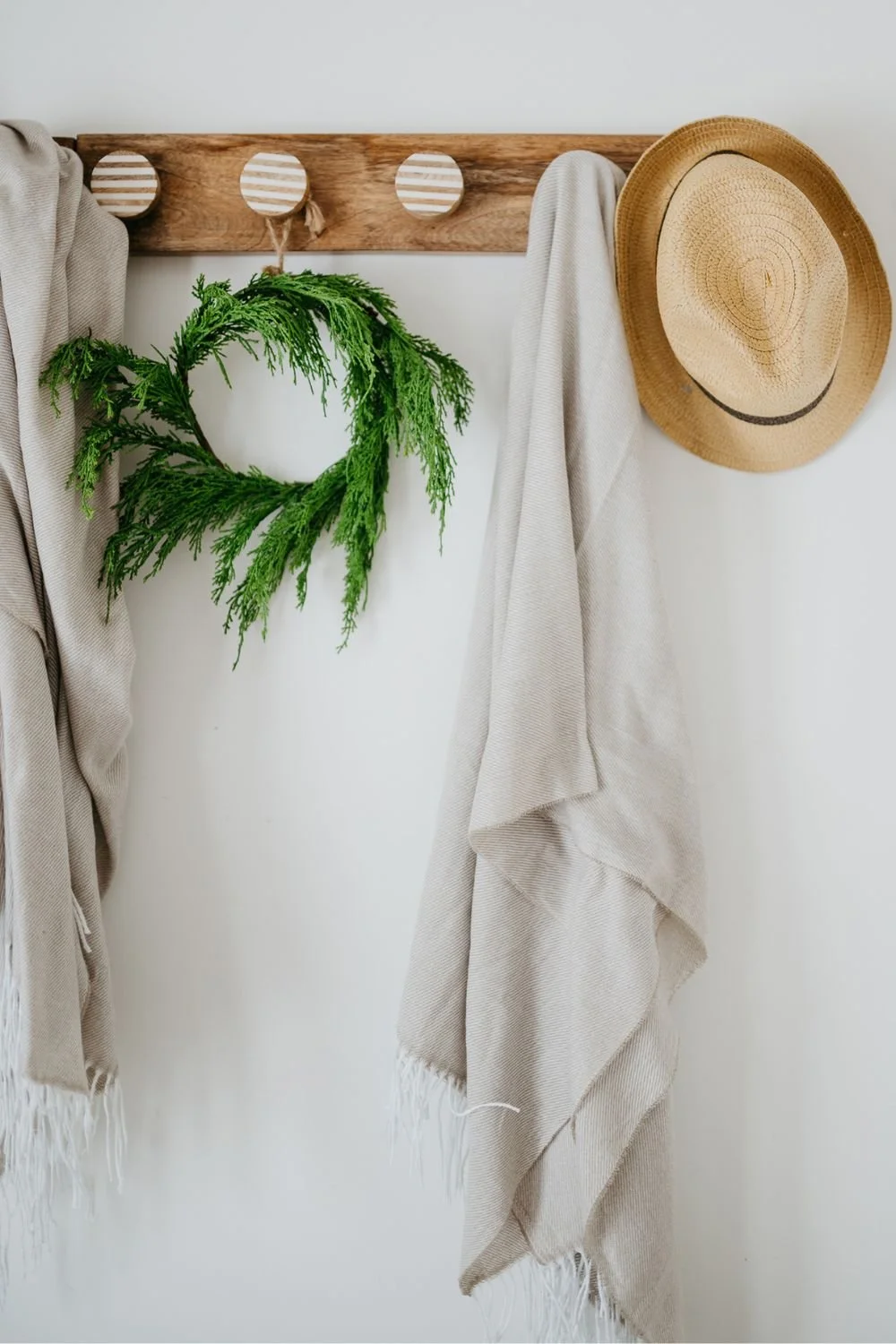
Before purchasing another seasonal decoration, take a look outside. Evergreen branches, pinecones, bare twigs, acorns, and fallen leaves can make natural arrangements. A few branches in your favorite vase may be all you need to bring a little winter character into a room.
2. Decorate with the season, not just the holiday.
There's no reason everything has to come down once the celebrations are over. Keep the natural greenery, woven baskets, or arrangements that still feel appropriate for winter. You might find that some of your favorite holiday decorations have a place in your home well into January and February.
3. Choose natural materials over disposable decorations.
Whenever possible, consider wood, ceramic, stone, glass, and natural textiles instead of plastic seasonal accessories. These materials offer texture and character without needing to speak a particular holiday. They're also pieces you can repurpose throughout the year.
4. Let winter's landscape inspire your color palette.
Look beyond traditional holiday colors. Deep blues, charcoal, soft whites, earthy browns, and muted greens all have a place in a winter home. A few thoughtful changes to your existing accessories can shift its mood without needing to redecorate the entire room.
Introduce the Water Element
5. Experiment with darker accents.
In Feng Shui, black and deep navy are associated with Water. Try incorporating them naturally through a picture frame, decorative bowl, pillow, or piece of artwork. A little contrast adds depth to a room without making it feel dark.
6. Look for flowing shapes.
Water doesn't have a fixed shape, which is why curves and undulating forms are associated with this element. Consider a rounded vase, a gently curved lamp, or artwork featuring a flowing landscape. These shapes can help soften rooms with lots of straight lines and sharp angles.
7. Make use of glass and reflective surfaces.
A glass vase, decorative mirror, or collection of glassware can introduce Water's reflective qualities. Pay attention to what your mirrors reflect, though. A mirror facing a beautiful view or favorite piece of art creates a different experience from one reflecting a cluttered corner.
8. Balance Water with Earth.
If your room already has dark colors or plenty of reflective surfaces, introduce some warmth through pottery, stone, woven baskets, or textured fabrics. Incorporating Earthy elements provides a sense of grounding, which can be especially welcome during winter.
9. Add a little Fire where it's needed.
Fire brings warmth and vitality to Water's cooler nature. This might be as easy as adding a candle, introducing warmer lighting, or using a small accent in terracotta or a rich reddish tone. You don't need much to change how a space feels.
Welcome Winter Into Your Living Spaces
10. Rearrange your living room for connection.
Take a look at how your furniture is arranged. Does it encourage conversation, or is everything oriented toward the television? Even moving a chair or adjusting a side table can make a room more inviting for the way you want to spend time gathering with guests.
11. Layer textures rather than decorations.
A wool throw, linen pillow, or soft area rug can make a room feel warmer without adding visual clutter. Think about how the materials work together. A smooth silky pillow against a chunky wool throw, for example, creates contrast without introducing another color or pattern.
12. Layer your lighting.
Winter's shorter days make lighting especially important. Rather than relying entirely on overhead fixtures, use a combination of floor lamps, table lamps, and smaller accent lights to create warmth and depth. Pay attention to bulb color, too. Bright white light can feel harsh in a room intended for relaxation.
13. Create a peaceful pocket.
Find a corner where you'd enjoy spending a little time this winter. It might be a chair near a window with a reading lamp and a small table for your coffee. You just need a little bit of space to create a pocket that makes you want to settle in.
14. Give your dining table a seasonal refresh.
Try a low arrangement of winter greenery, a ceramic bowl filled with acorns or pinecones and a few candles. Keep the arrangement simple enough that you can leave it in place and still enjoy a meal together. The goal is to make the table inviting, not create something that needs to be moved every time you sit down to eat.
15. Pay attention to scale and proportion.
When styling a mantel, console, or bookshelf, resist the temptation to fill every inch. A tall vase of branches paired with a low ceramic bowl can make a more interesting arrangement than several small decorations scattered across a surface. Leave some breathing room around your favorite pieces.
Give Your Bedroom Some Attention
16. Start by removing what doesn't belong.
In Feng Shui, the bedroom is an important space for rest and our relationship with ourselves. Before adding anything, look at what's accumulated on your nightstand, dresser, or under the bed. Stacks of books, clutter, even electronics, can make it difficult to settle in for a good nights sleep.
17. Make your bed inviting.
Add an extra layer of bedding if needed and choose fabrics that feel comfortable against your skin. Notice how the bed looks when you enter the room. It should feel like a place you look forward to returning to each evening. Personally, I love giving my bedroom a little luxury hotel treatment by preparing it for my own nightly turndown service.
18. Soften your bedside lighting.
If you have bright overhead lights or cool-toned bulbs, consider switching to warmer bedside lamps. A dimmable light can be especially useful when you're reading or winding down in the evening.
19. Look at the room from the doorway.
Stand at the entrance to your bedroom and notice what catches your attention. Does the room feel sparse and cold or cluttered and overly furnished? Sometimes this little exercise reveals more than following a decorating checklist ever could.
Refresh the Spaces We Often Overlook
20. Make your entryway welcoming.
In Feng Shui, the front entrance is where fresh energy enters the home. Clear away shoes, bags, and anything obstructing the doorway. Refresh the doormat, check for adequate lighting, and consider adding a natural arrangement of greenery, pine, and textered ribbon that greets you and your guests.
21. Bring warmth into the bathroom.
Bathrooms already contain a strong presence of Water through their plumbing and fixtures. Rather than adding more Water symbolism, consider balancing the room with earthy materials. A wooden stool, ceramic accessories, or wicker baskets and containers can make a showers and bathing feel more relaxing and cozy.
22. Give your kitchen a seasonal touch.
Winter decorating in the kitchen can be as simple as a wooden bowl filled with seasonal fruit or flowers, or a few bare branches arranged in your favorite ceramic pitcher on the counter. Sometimes less really is more when it comes to decorating.
23. Make your workspace feel less demanding.
If you work from home or have a space carved out for creative pursuits, consider giving it a little seasonal refresh. Clear away unnecessary papers and clutter and introduce glass or reflective objects. Balance with crystals and candles to bring in a little Fire energy and help spark creativity and inspiration. A productive workspace can still feel personal and intentional.
Explore Your Home With Greater Intention
24. Consider what your home says about your direction in life.
In the Five Elements, Water is connected to our careers and sense of direction. Does your workspace—or your home in general—represent a chapter you've moved beyond, or does it reflect what you're working toward? Is there something in your life you're seeking greater clarity around? What we choose to display in our homes can influence how we feel about where we are in life, whether we're consciously aware of it or not.
25. Create a sacred space for reflection.
If clarity is what you need, water encourages introspection, making winter a lovely time to create a place for reading, journaling, or meditation. Arrange a few favorite books beside a comfortable chair and set aside a small surface for objects that hold personal meaning. A sacred space doesn't need to be elaborate. It's the intention behind it that matters.
26. Remove, rearrange, and clear the energy.
Before bringing anything new into your home, consider what you can remove or rearrange. Moving furniture or exchanging accessories between rooms can offer a fresh perspective without another purchase. You might also begin winter, or welcome the new year after the holidays, with a space clearing ritual. Open the windows when weather permits, let in fresh air, and use sound or another practice you enjoy to mark the transition. My Sacred Space Clearing Kit can help you create a more intentional ritual around this process.
A More Intentional Way to Decorate
You don't need to complete this entire checklist to welcome winter into your home. I'd encourage you to choose a few ideas that feel relevant to the spaces you use most.
Seasonal decorating offers an opportunity to look at our homes a little differently. Rather than following trends or filling our spaces with more things, we can consider how our surroundings support the way we want to feel and live. Inside Seasonal Alignment Practice, we explore ways to bring the seasons into our homes, along with practices that support our minds and bodies, creating a more intentional relationship with ourselves and the spaces we live in.
Continue Exploring Mind Body Home
If you’d like to explore more ways to work with Water and the changing seasons, you may also enjoy:
Rest & Reflect With Winter’s Water Element: A Different Approach to the New Year
The Winter Solstice: What the Return of Light Can Teach Us About Change